

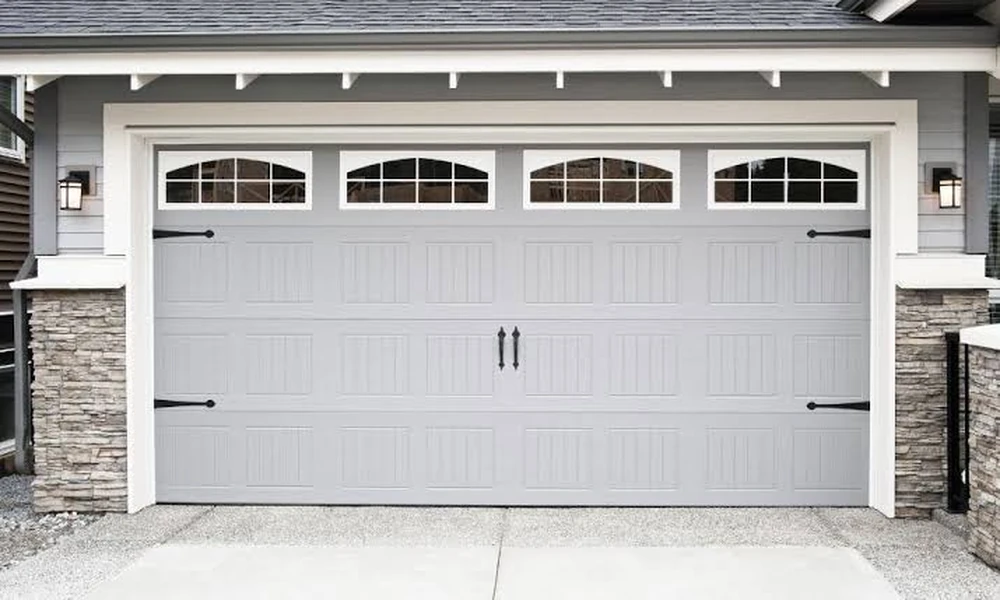
That bang from the garage last Tuesday was not a raccoon. It was a torsion spring snapping at the end of its service life. You walked out, hit the remote, and heard the opener hum while the door stayed rooted to the floor. If that is your story this week, you are in good company. One of the two springs above your door likely carried most of the load, and it finally quit.
Here is the short answer: a garage door spring has a rated cycle life, and when it reaches it, the spring breaks. Dead springs cannot lift the door safely, so the smart move is to stop using the door immediately and get a qualified technician out. Here is what is happening, what you can check yourself in five minutes, and what to leave alone.
What a spring actually does all day
Your door is not light. A standard two-car door can weigh a couple hundred pounds, and the opener is only responsible for about the last ten or fifteen of that. The springs counterbalance the rest. They are wound tight when the door is down, releasing tension as it rises, which is why a properly tuned door feels almost weightless when you pull the manual release.
Run the math on your own door. If you open and close it twice a day for a decade, that is thousands of full cycles, and each cycle flexes a coil of steel wire through a complete twist. Springs break because of fatigue, not because you did anything wrong. Cold snaps finish them off faster; metal gets brittle in a Cincinnati January, which is why so many door failures land in the first cold week of the year.
Torsion spring or extension spring?
Look above the closed door. A torsion spring is a horizontal coiled bar centered over the header, usually one or two of them. Extension springs stretch along the horizontal tracks on each side of the door. Most homes built in the last few decades and most doors of any weight run torsion. Your parents’ house probably had extension springs, and that sound you remember, the loud pop followed by a dangling bit of wire and a door that dropped an inch, was an extension spring letting go.
The tell for each is simple. Torsion springs break with a clean gap in the coil and a door that feels impossibly heavy to lift. Extension springs break with a visible stretched-out loop and, if you are lucky, a safety cable that kept the flying spring from hitting your car or your shins.
Three signs your spring is about to go
Springs mostly telegraph a failure, but only if you are paying attention. Watch for these.
- The door feels heavy on manual release. Pull the red handle and lift. A balanced door rises with two fingers. If you are leaning into it, the springs are losing tension. That is your early warning.
- The opener strains. A door that used to glide now shudders, lurches, or forces the opener to work hard. Do not just turn up the opener force setting. That masks the symptom and burns out the motor.
- You can see or hear a gap. A clean break in a torsion coil, a two-inch gap in the wind, or a crooked door that rises higher on one side. All of these point to one spring carrying the load alone.
Age matters too. Springs that have passed several years of daily use are on borrowed time even if they look fine. If a technician tells you the other spring is a season away from the same failure, believe them. Replacing both at once is cheaper than two service calls, and it keeps you from doing this dance again next winter.
Why this is not a Saturday afternoon job
This is the part where I stop being diplomatic. A wound torsion spring holds enough stored energy to break bones. It does not announce itself the way a blade or a saw does, which is exactly what fools people who are handy in other areas. You cannot see the tension, and you cannot feel it until it is already moving.
Home improvement shows and short video clips skip over that reality because they are selling the thrill, not the hospital visit. The springs are under load even when the door is closed and the power is off. A hardware store sells winding bars, but buying the tool is not the same as knowing how much to wind a specific spring on a specific door.
The numbers back this up. Machine guarding and stored energy release are among the reasons manufacturing and trades work carries elevated injury risk, and the Occupational Safety and Health Administration keeps those hazards front and center for the same reason a garage door deserves respect. Spring work belongs in the category of jobs you call someone for, not jobs you learn from a video the same afternoon.
A five-minute check you can do safely
Here is the routine I would suggest before calling anyone. Do it with the door closed and the opener unplugged.
- Stand back from the door and check the tracks on both sides. Look for bends, dents, or loose bolts.
- Look up along the horizontal track and the spring bar. Broken spring, gaps, or a door that is not level when partly open all point to counterbalance trouble.
- Look at the cables along the sides. Frayed or hanging cables mean the door is not safe to operate.
- Push the door a couple of inches by hand. It should feel light and even. If it feels heavy or the panels twist, stop.
- Wipe the torsion springs with a rag and look at the coils. Rust, flaking, and visible gaps all count against them.
None of this includes winding, adjusting, or touching the spring itself. That is deliberate. The point of a check is to give you information and a decision, not to put you under a loaded spring with a tool.
Torsion springs and safety standards
Counterbalance hardware is not a loose collection of parts, and the safety rules that cover it come from standards bodies with real teeth. Requirements for residential garage doors and openers are shaped by published safety standards that manufacturers, installers, and inspectors work from, and the National Institute of Standards and Technology is a good place to see how technical standards get built and applied across industries.
That is why a reputable tech matches the spring to the door’s weight and height instead of grabbing whatever is on the truck. The wrong spring, even a new one, will fail early or strain the opener. One more thing people get wrong. A broken spring and a burned-out opener motor produce almost the same symptom: door will not move, opener groans. Pop the manual release and lift the door. If it fights you, the spring is the problem, not the motor. If it lifts easily and the opener still fails, the problem is the opener. Five minutes with the red handle saves you from paying for the wrong repair.
When you should call it in
If the door will not open at all, if you hear a bang and the door will not budge, if you see a gap in a coil or a dangling cable, or if your opener is straining, you are in the drop-everything category.
Do not prop the door open with a broom handle. Do not run it a few more times to be sure. Leave the door closed if it is already down, keep everyone clear of the tracks, and get a technician out.
If you have decided to stop guessing and want this handled properly, the team that does broken garage door spring repair in Cincinnati can match the spring to your door and check the rest of the system while they are there. Cold weather does not care about your weekend plans, and a balanced door with fresh springs is one less thing to worry about all winter. When the door starts fighting you, does it really make sense to keep forcing it?
