

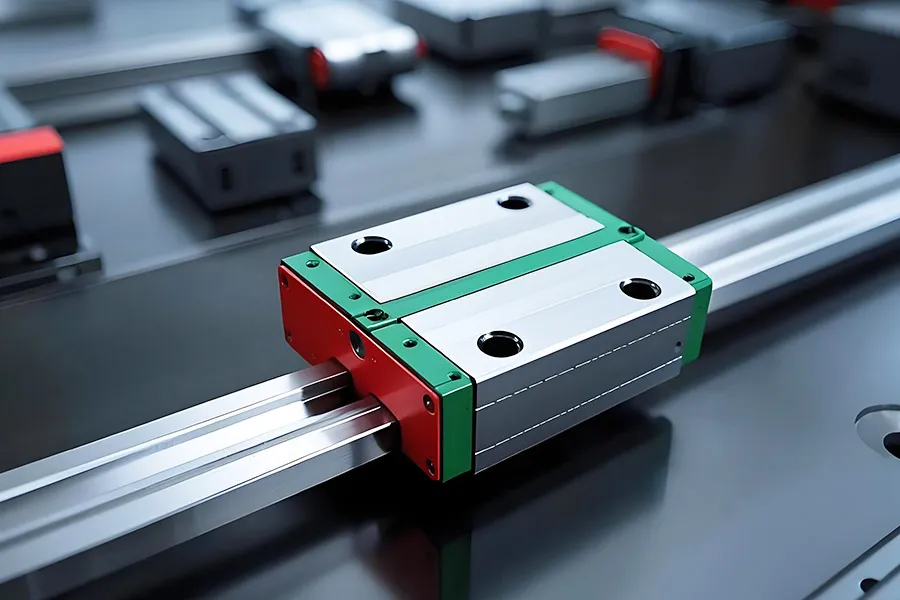
The movements of precision machinery are extremely sensitive, and even the slightest error can be quite expensive scrap or maintenance headaches. Therefore, the selection of the right linear motion system is of utmost importance. Specifically, engineers often investigate whether the ball bearing slides on smooth shaft (ลูกปืนสไลด์บนเพลาเกลี้ยง, which is the term in Thai) can eliminate friction and thus increase the performance of the demanding applications.
Why Low Friction Matters
- Less torque, smarter motion: Friction is a force that opposes motion. When sliding the carriage and the shaft, the motors do more work, there is a great amount of heat generated, and the parts get worn out quickly. A bearing slide reduces the amount of resistance, allowing the system to move with less force and free of resistance.
- Improved accuracy because of the systematic travel: Stick-slip motion leads to the loss of precision. The moment movement gets stuck or jumps, the tolerances are not maintained anymore. A real low-friction slide prolongs the travel to be smooth, predictable, and repeatable, which is crucial in CNC, robotics, and metrology applications.
- No heat and less wear: Contact friction generates heat, heat degrades lubricants, and causes parts to be deformed. Rolling contact distributes the load and minimizes the damage on the surface, thus prolonging the life of the service
What Influences Friction in Linear Slides
- Shaft finish and hardness: A polished and hardened shaft surface is a great help to smooth travel. Micro-roughness is the opposite; it increases the resistance and speeds up the wear.
- Ball circulation and sliding contact: Different types of contact have different degrees of friction, with rolling contact being the one with the least among all types of contact. The internal ball path, preload, and retainer design influence the smoothness and stability of the motion felt.
- Load distribution: Misalignment leads to the concentration of the stresses at a few points, which in turn increases friction. Proper load balancing not only prevents major wear but also keeps the motion stable even under weight.
- Lubrication and contamination: Dust, aged grease, or wrong lubrication immediately make friction go up. Clean surfaces plus the right lubricant make performance stable.
INB Thailand LMIF Series
For engineers who seek consistent performance without the hassle of trial-and-error, the LMIF series offered by INB Thailand is the solution. These linear bushings consist of exactly ground raceways, the toughest materials, and innovative retainer designs that reduce friction and provide consistent motion. They are able to deal with the toughest loads while still ensuring smooth travel, thus being perfect for automation equipment, CNC builds, and custom machines.
