

The 5 Things to Look for in a Commercial Coffee Machine for Your Singapore Office
- Business
Felton Walsh
- 0
- 7 minutes read
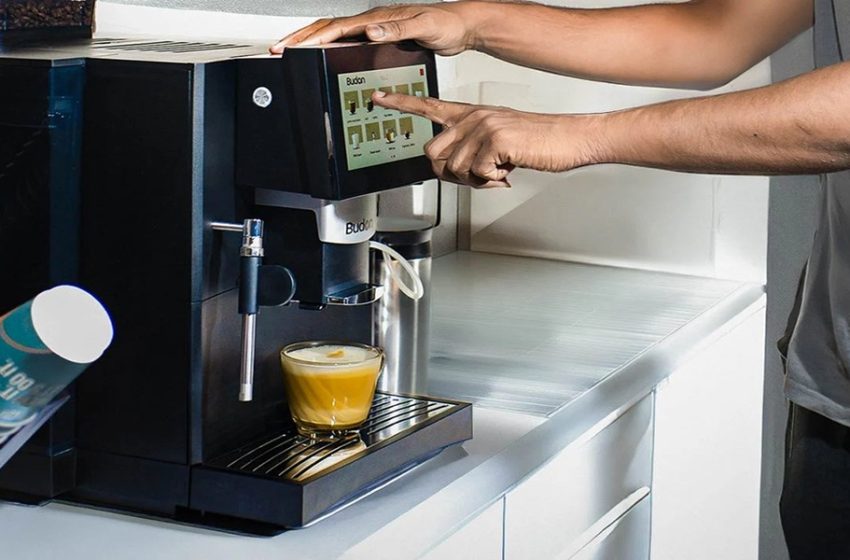
A commercial coffee machine Singapore offices can truly depend on is, in quiet ways, a miniature case study in how environment shapes technology. Coffee itself travelled from the Ethiopian highlands, through Yemeni ports, into the Ottoman Empire, across Europe, and finally into the humid tropics where we now drink it at our desks. Every serious office machine reflects that long journey: the pressure, the grind, the heat, and especially the water. In a city sitting almost on the equator, with its own peculiar water chemistry and its own working rhythms, the same model will behave very differently from one installed in London or Munich. Getting the choice right saves far more than money. It shapes daily morale.
With that in mind, here are the five qualities worth examining before any purchase order is signed.
1. Capacity matched to your actual daily demand
Just as pastoral societies scaled their herds to the grassland available, your machine must scale to the cup count your team genuinely drinks. Many buyers overestimate consumption in the first month and underestimate it by the sixth.
- A small team of 10 to 20 people usually drinks 40 to 80 cups a day
- A medium office of 50 to 100 people can push past 250 cups during peak periods
- Singapore offices tend to see two sharp spikes, roughly 9 am and 2 pm, after lunch at the nearest kopitiam
Undersized machines suffer. Boilers struggle, grinders overheat, and queues form. Oversized machines waste capital and floor space. Ask the supplier for their recommended daily capacity and then trim it to the sober reality of how often your staff actually walk to the pantry.
2. Grinder quality and bean-to-cup capability
Fresh coffee is a perishable agricultural product, not a shelf-stable commodity. In Singapore’s humid air, pre-ground coffee stales in hours rather than days. A commercial coffee machine singapore therefore earns its keep by grinding on demand.
Key grinder considerations:
- Conical burr grinders are quieter and more forgiving of bean variation
- Flat burr grinders give a more uniform grind and suit espresso-heavy menus
- Ceramic burrs resist heat build-up; steel burrs tend to be sharper for longer
A bean-to-cup system, where grinding, tamping, and brewing happen in one sealed cycle, removes most of the human variables. For offices without a trained barista, that reliability matters more than chasing the last 5 percent of café-grade flavour.
3. Water filtration suited to Singapore’s supply
Here the local context becomes decisive. Singapore’s tap water, treated by PUB to World Health Organization drinking standards, is among the safest in the world. Yet safety and suitability are different things. The mineral profile still affects extraction, scale build-up, and the longevity of heating elements.
A proper office coffee machine in Singapore should therefore include:
- An inline water softener or a cartridge-based filter
- A total dissolved solids reading roughly in the 80 to 150 ppm range for balanced extraction
- A descaling schedule, typically every three to six months in a medium-use setting
Skipping filtration is a short-term saving that becomes a long-term repair bill. Calcium carbonate, deposited a fraction of a millimetre at a time, quietly narrows the pipes and dulls the taste until one Monday morning the boiler simply fails.
4. Serviceability and parts availability
This is where many buyers, dazzled by specifications, forget to ask the fundamental question: what happens when the machine breaks? Machines, rather like civilisations, survive through the networks that support them.
Before signing, ask your supplier:
- How many local technicians are trained on this model
- What the typical response time is for service calls
- Which parts are stocked in Singapore and which must be shipped from Europe
- What the warranty actually covers, and for how long
Imported Italian or Swiss machines often carry famous names and genuinely superior engineering. Without local spare parts and service, however, that engineering becomes an expensive paperweight during the two-week wait for a shipment. A slightly less prestigious commercial espresso machine in Singapore, backed by a strong local support team, often outperforms a celebrated one that nobody on the island can fix.
5. Footprint, power, and placement
Finally, the humblest constraints: physics and electricity. Singapore offices run on a 230 V, 50 Hz single-phase supply, typically rated at 13 amps per socket. Larger traditional espresso machines may demand a dedicated 20 amp or three-phase line, which most commercial pantries do not provide without renovation.
Consider:
- The machine’s width, depth, and height against your counter space
- The clearance needed above the machine for the bean hopper and service access
- Ventilation in an enclosed pantry, where tropical heat accumulates quickly
- Plumbed water connection versus a refillable tank, with mains-plumbed models usually winning on convenience
These humble details quietly decide whether the machine becomes a daily ritual or a quarterly regret.
Putting it together
Coffee is, in the end, a cultural technology. The right pairing of bean, water, grind, pressure, and service is what turns a pantry appliance into something the office looks forward to each morning. Pay attention to all five factors: capacity, grind, water, support, and footprint. None of them is glamorous in isolation. Together, they determine whether the investment quietly delivers for five good years or disappoints within six months. Treat the purchase less as an equipment order and more as an ecological decision, choosing a commercial coffee machine singapore workplaces can live with for years rather than months.
